3 min · 2026-08-11
Symmetry vs. Asymmetry: How to Choose Your Gallery Wall Layout
Discover when to choose a structured, symmetrical grid and when an organic, asymmetrical arrangement works best for your art collection.
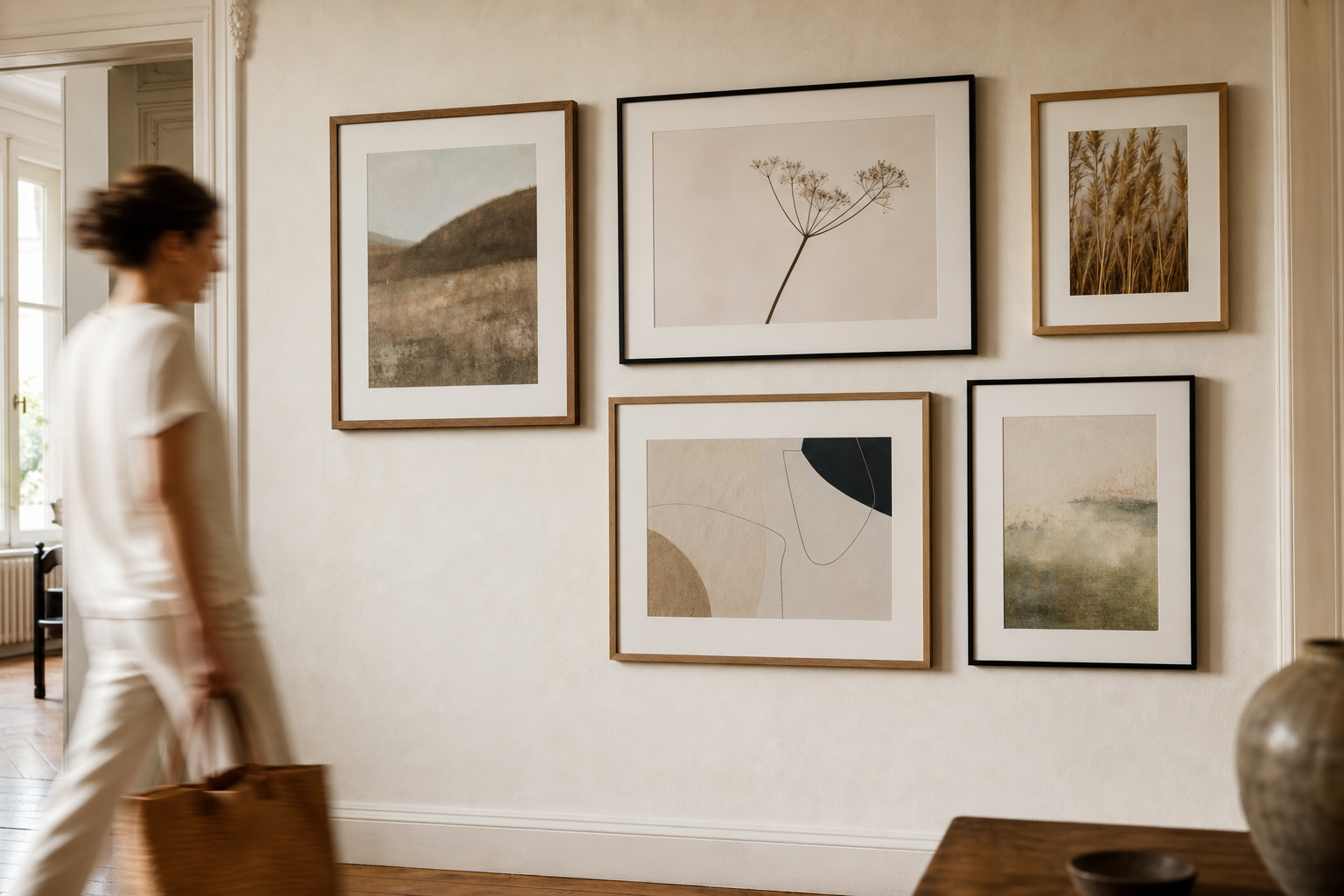
A gallery wall is an art form in itself, but its success often depends on structure. Deciding between symmetry and asymmetry dictates the room's energy. Symmetrical arrangements—often called grid walls—rely on identical frames, uniform spacing, and aligned margins. This approach introduces a sense of calm, order, and classical elegance, working exceptionally well in formal dining rooms, offices, or above structured sofas.
On the other hand, asymmetrical layouts offer a more dynamic and relaxed vibe. Here, you can mix different frame sizes, orientations, and even mediums, such as canvas prints alongside framed posters. The secret to a successful asymmetrical wall is maintaining a visual balance rather than strict measurement. You can achieve this by grouping smaller pieces to match the visual weight of a larger one or keeping a consistent color palette.
Choosing the right style depends on your space and personal collection. If your interior leans minimalist, traditional, or Scandinavian, a precise grid will complement its clean lines. If you have an eclectic, bohemian, or modern interior, an organic, free-form layout will reflect that creative energy. Consider also the art itself: series of similar botanical prints demand symmetry, while a diverse collection of travel memories and abstract art thrives in asymmetry.
If you are unsure where to start, pre-designed art sets can help you find the perfect balance. At gall.art, we curate harmonious sets of posters and canvas prints that take the guesswork out of planning. You can easily arrange them in a strict grid or a loose, modern collage to perfectly match your home's unique character.